How Boost Foam Changed Running Sneakers Forever
In the world of running footwear, few innovations have reshaped expectations as profoundly as the arrival of Adidas Boost foam. Introduced in 2013, this material quickly became a benchmark for cushioning and energy return, challenging long-standing assumptions about what a running shoe could offer. Prior to Boost, most running shoes relied on EVA-based foams that provided adequate comfort but often sacrificed responsiveness over time. The introduction of expanded thermoplastic polyurethane (E-TPU) marked a departure from conventional materials and opened new possibilities for midsole design.
Boost foam did not emerge from a single breakthrough but from years of materials research and collaboration with chemical suppliers. The result was a foam that could compress under load and then rapidly rebound, returning a significant portion of the energy stored during impact. Runners initially responded with curiosity and eventually with enthusiasm, as the foam appeared to offer a rare combination of softness and bounce. Over the following years, Boost became a defining feature of Adidas running shoes and influenced the broader footwear industry to explore alternative cushioning systems.
This article examines the material science behind Boost foam, its effects on running performance, and the ways in which it changed the landscape of sneaker design. By understanding the properties and limitations of this technology, one can better appreciate how a single foam formulation helped redefine what runners expect from their shoes.
The Material Science Behind Boost Foam
At the heart of Boost technology is a process known as steam expansion of thermoplastic polyurethane (TPU). TPU is a type of elastomer that is already known for its durability and flexibility in applications ranging from automotive parts to phone cases. To create Boost, raw TPU pellets are placed in a pressurized chamber and subjected to steam, which causes the pellets to expand into small, closed-cell foam beads. Each bead is roughly the size of a grain of rice and contains thousands of tiny air pockets that give the foam its cushioning properties.
The expanded beads are then fused together under heat and pressure to form a midsole sheet or a pre-formed shape. Unlike traditional EVA foams that are chemically cross-linked and often lose resilience over time, the individual TPU beads maintain their structural integrity even after repeated compression. This cell structure is what allows Boost to deliver consistent energy return across a wide range of temperatures and impact forces. The material also exhibits a lower compression set compared to many other foams, meaning it tends to retain its thickness and bounce longer under typical use.
One important aspect of Boost is that the energy return is not entirely linear. At lower impact forces, the foam compresses moderately and rebounds quickly. Under higher loads, such as during heel strike in a fast run, the beads compress further but still return a significant portion of the energy. This behaviour is a result of the viscoelastic properties of TPU, which combine elasticity with a slight time-dependent response. Runners often describe the feeling as a “springy” or “bouncy” sensation, though this perception varies with individual stride and shoe design.
Energy Return and Cushioning Characteristics
Energy return in footwear refers to the percentage of impact energy that is fed back into the runner’s stride rather than being dissipated as heat or absorbed by the shoe. Boost foam typically returns between 70% and 80% of the energy under controlled laboratory conditions, depending on the specific formulation and temperature. This figure is notably higher than traditional EVA foams, which often return 50–60% of the energy. The difference becomes more pronounced in cold weather, where many foams stiffen and lose responsiveness, while Boost maintains a relatively consistent performance.
Cushioning, however, is not solely about energy return. The degree of softness or hardness of the foam also affects how a runner perceives comfort and stability. Boost foam is engineered to provide a balance between initial comfort and rebound. The expanded beads create a structure that deforms easily at first contact, providing a soft landing, and then stiffens as compression increases, preventing a bottoming-out sensation. This characteristic is sometimes referred to as progressive cushioning. It allows the shoe to accommodate a range of runner weights and gait patterns without feeling either too mushy or too hard.
Several factors influence how Boost behaves in practice:
- Temperature: the foam softens slightly in warm conditions and stiffens when cold, though the effect is less dramatic than with many other foams.
- Runner mass: heavier runners may experience greater compression and thus more energy return, but also potentially faster degradation over high mileage.
- Strike pattern: forefoot strikers tend to apply force differently than heel strikers, which can alter how the foam compresses and rebounds.
- Midsole geometry: the shape and thickness of the Boost layer, as well as the presence of additional support elements, modify the overall feel.
These variables mean that no single claim about Boost’s performance applies to every situation. Runners seeking a specific sensation often need to try different models and combinations of materials to find a suitable match.
Impact on Running Shoe Design
The introduction of Boost foam prompted significant changes in how running shoes were designed. Prior to Boost, midsole thickness was limited by the weight and durability of EVA foams. Boost allowed for thicker cushioning without a proportional weight increase, because the expanded beads are relatively lightweight. This enabled designers to create shoes with greater stack heights while keeping overall weight moderate. The Adidas Ultra Boost, for example, featured a 29-millimeter heel stack and a 17-millimeter forefoot stack, which was considered generous at the time of its debut.
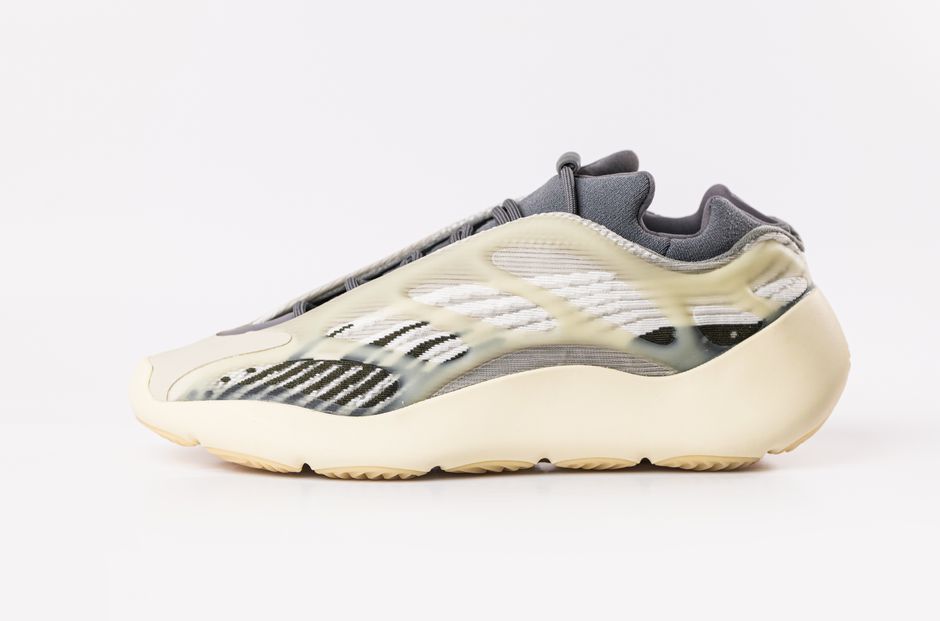
Boost also enabled new approaches to midsole geometry. The fused bead structure could be shaped into complex forms, such as a full-length carrier or segmented pods. Some shoes used a combination of Boost in the heel and a denser foam in the forefoot to balance cushioning and responsiveness. Others placed a thin layer of Boost under a conventional foam top layer to enhance initial comfort. These design choices affected the shoe’s stability, energy transfer, and overall ride feel, illustrating how material properties can directly influence construction methods.
Another design consideration was the outsole coverage. Boost foam is not particularly abrasion-resistant, so outsoles typically require rubber layers in high-wear areas. This added weight and complexity but allowed designers to place rubber only where needed, reducing overall mass. The integration of Boost with other materials, such as a heel counter or a torsion bar, further expanded the possibilities for creating shoes that met the needs of different runners. Over time, the success of Boost prompted other brands to develop their own proprietary foams, leading to a broader diversification of midsole technologies.
Durability and Long-Term Performance
One of the notable characteristics of Boost foam is its durability relative to traditional running shoe foams. The expanded TPU beads show a lower tendency to lose their shape after hundreds of miles of running. Laboratory tests that simulate repeated compression cycles often indicate that Boost retains a higher percentage of its original thickness and stiffness compared to standard EVA foams. This suggests that runners may experience a more consistent feel over the life of the shoe, though individual results can vary widely based on usage patterns, surface type, and runner weight.
However, durability is not the same as immortality. Over extended use, the bond between the beads can weaken, leading to a gradual softening or even separation of the midsole. Some runners report that Boost shoes lose their initial “pop” after 300–500 miles, while others find the foam remains comfortable for longer distances. Environmental factors such as extreme heat, prolonged exposure to sunlight, or frequent submersion in water can accelerate degradation. Additionally, the outsole rubber may wear out before the foam itself shows significant change, meaning the overall lifespan of the shoe depends on both components.
Manufacturers often provide general guidance on shoe replacement intervals, but these recommendations are based on averages rather than individual conditions. Runners who prioritize a consistent feel may choose to replace their shoes at the first signs of diminished resilience. Others may continue to use Boost shoes for walking or casual wear long after the performance characteristics have shifted. In any case, the foam itself is not designed to be replaced or serviced; the entire midsole unit is encased within the shoe structure.
Broader Influence on the Footwear Industry
The rise of Boost foam did not occur in isolation. Its success influenced a wave of innovation across the running shoe market. Competitors began developing their own high-energy-return foams, such as Nike’s React foam and later the Pebax-based foams used in carbon-plate racing shoes. While these materials differ chemically and structurally from Boost, they share the goal of improving energy return while maintaining lightness and comfort. The competition spurred further research into foam formulations, manufacturing processes, and sustainability considerations.
Boost also helped shift consumer expectations. Runners who had long accepted the trade-off between cushioning and responsiveness began seeking shoes that offered both. This trend prompted brands to experiment with multi-density midsoles, hybrid foams, and even advanced polymer blends that combine properties from multiple materials. The influence extended beyond running shoes into lifestyle footwear, where the comfort of Boost found a ready audience in everyday wear. Many brands now offer “running-inspired” sneakers that borrow cushioning technology from performance models, further blurring the line between athletic and casual footwear.
Looking forward, the legacy of Boost lies in its demonstration that a single material innovation can redefine a product category. While newer foams may surpass Boost in specific metrics such as weight or energy return, the fundamental shift toward energy-return-focused midsole design remains a direct outcome of Boost’s introduction. The material continues to be used in various Adidas product lines, often in combination with newer foams or reinforcements, showing that its role is still relevant even as the industry evolves.
In summary, Boost foam changed running sneakers by introducing a new standard for cushioning and rebound that was previously thought impossible from a foam. Its material science allowed for a unique combination of softness and responsiveness, which in turn enabled new design approaches and raised runner expectations. The impact of this technology is still evident in the ongoing pursuit of better energy return across the entire footwear industry.